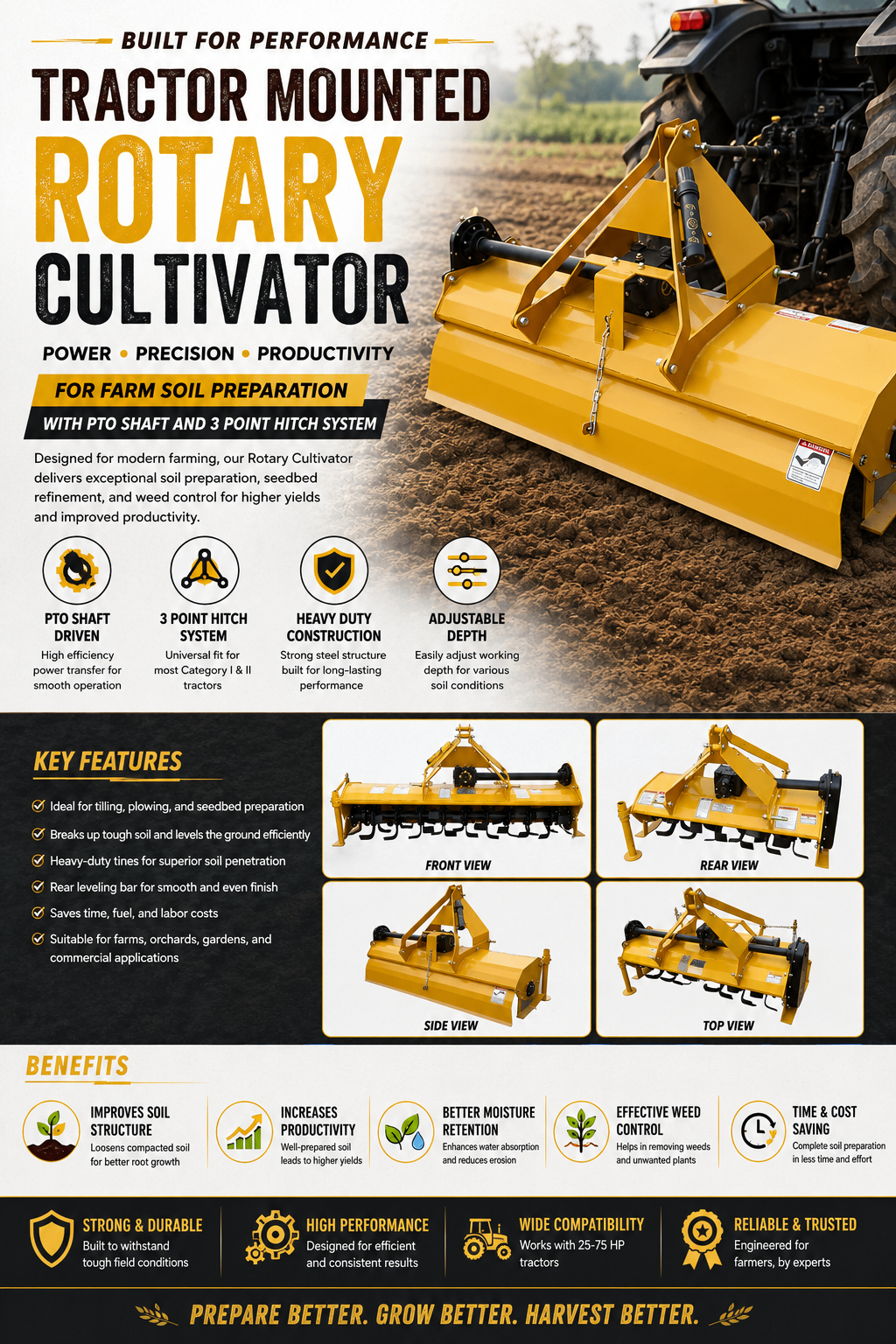
Choosing the right farm cultivating implement can significantly improve your soil's output. This guide explores key factors to evaluate before making a purchase. To begin with, assess a field's size and sort. Smaller areas may suit a more compact model, while larger operations need a heavier-duty unit. Next, examine the cultivating width and depth capabilities. In conclusion, remember to consider financial resources and the manufacturer's standing for longevity and user service.
Maximize Your Earth Readying with a Implement Mounted Rotating Tool
Preparing your land for planting can be a chore, especially on extensive areas. A implement mounted rotary cultivator offers a considerable benefit by rapidly breaking up dense soil, incorporating fertilizers, and creating a loose seedbed. This equipment permits you to cover greater area in reduced period, reducing labor expenses. Consider these important aspects when selecting a model:
- Engine size – Match it to your implement's horsepower.
- Width – Determines the amount of soil tilled per pass.
- Depth control – Enables you to tailor the tilling extent.
Investing in a machine mounted rotary tool is a smart investment for any farmer seeking to optimize earth quality and maximize harvests. It's a real help!
Power Take-Off Rotary Cultivator: Might and Output for Your Farm
Maximize your crop yield with a heavy-duty PTO power tiller . These powerful machines are built to easily tackle tough ground , breaking it up for optimal planting . Featuring a direct connection to your machine’s PTO, these cultivators deliver consistent power providing a thorough tilling of your acres . Choose a PTO rotary tiller and enjoy the improvement in your agricultural practice .
Picking the Ideal Tractor Rotary Tiller for Your Requirements
Choosing the best tractor garden tiller can feel complicated, but recognizing your particular job requirements is vital . Consider the acreage of the area you’ll be cultivating . Compact tractors generally work best with less robust tillers, while larger areas might demand a beefier model. Think about the type of soil you're dealing with – sandy soil will require a tiller with greater power and sturdy tines. Also, consider options like adjustable range and rear discharge. Finally , research multiple manufacturers and review customer feedback before rendering your definitive decision.
- Evaluate your acreage size.
- Consider the soil type.
- Inspect the tiller's strength .
- Analyze different models .
Advantages , and Applications | Uses}
Powered tillers are essential implements mounted to tractors for conditioning the ground in rural settings. This type of machinery generally fall into multiple types, including pull-behind models and varying power sizes. The primary advantage is their ability to rapidly break up dense earth , blending compost farm soil tiller and forming a suitable seedbed. Common applications range from initial land setup to crop suppression and integrating plant residue back into the earth . Ultimately , they substantially improve crop output and lessen manpower demands.
Upgrade Your Farming : Tractor Rotary Tillers Explained
Are you struggling difficulties preparing fields for planting ? Explore upgrading your agricultural approach with a agricultural rotary tiller . These powerful implements efficiently break up tough soil, mixing fertilizer and creating a fine seedbed. Compared to traditional methods, rotary tillers use whirling tines to break the earth, resulting in increased crop yields and reduced labor . Find out how a rotary machine can modernize your farming operations today!